Showing posts with label embalming. Show all posts

Friday, August 15, 2014

Egyptian embalmers

Researchers from the Universities of York, Macquarie, and Oxford have just overturned the accepted timeline of ancient Egyptian embalming. More than 10 years ago, Macquarie Egyptologist Jana Jones (IMAGE ABOVE) noticed embalming resins in the cloths found with bodies buried as early as 4100 B.C.E. in small cemeteries in a region of central Egypt known as Mostagedda. The team collected and analyzed about 150 samples of this linen and confirmed that they contained a base of fat or oil mixed with resin from pine trees, aromatic plant extracts, plant gum or sugar, and a natural petroleum – ingredients known to have both adhesive and antibacterial properties. Their research indicates that the early Egyptians understood the science that would later become the basis of true mummification 1,500 years before it is generally believed to have begun in the Old Kingdom. Jones exclaims, "The most surprising and probably most sensational finding was that there was no fundamental change in the recipe of the embalming mixtures used when pharaonic mummification was at its peak, some 2,500 to 3,000 years later!"


Friday, March 15, 2013

Unlikely modern mummy

Following the death of Venezuelan president Hugo Chavez, I read that the government intended to permanently preserve his body in a military museum so that it could remain on display like that of Communist revolutionary Vladimir Lenin, still enshrined in Moscow 89 years after his death. Soon after that announcement was made, I received an inquiry from Spanish journalist Carlos Benito and offered the following quote, which he translated and used in his article in Las Provincias:

"I think that governments sometimes don't realize what a big responsibility it is to permanently embalm their leaders. Traditional embalming is only intended to keep the body presentable for a matter of days. To enshrine a body under glass is going to require especially strong preservation and continued maintenance to ensure that at least the visible parts of the body don't deteriorate."
I was not surprised to learn that the Venezuelan government may be abandoning their plans. "Russian and German scientists have arrived to embalm Chavez and they tell us it's very difficult because the process should have started earlier....Maybe we can't do it,'' states acting President Nicolas Maduro.

Saturday, June 4, 2011

Diogenes

"To paint oneself is to paint a portrait of someone who is going to die. And the same applies if one paints anybody else."~Robert Lenkiewicz

I've just learned about an artist who died nearly 9 years ago. British painter Robert Lenkiewicz (1941-2002) made postmortem headlines when an embalmed body was found in his studio. It was that of a homeless man who Lenkiewicz had discovered, dubbed "Diogenes," and often used as a model (1st image is a 1977 oil painting "Diogenes at Night in Studio Window" and 2nd image is an undated pencil sketch). The artist had embalmed and concealed the corpse of the 72-year-old man, whose real name was Edwin MacKenzie, 18 years earlier. Lenkiewicz had baited and taunted the authorities at the time, to the point that they gave up looking for the hidden body of the tramp. "I mean no harm and offense but I am seriously committed to the personal arrangement between myself and old Diogenes....Diogenes would have smiled at how much more concern there has been for his death than he received alive," he said. The coroner concluded when the body finally surfaced that Diogenes had died a natural death and was "well-preserved," but was reluctant to release the remains to the Lenkiewicz Foundation in the absence of documentation that established the lawful right to possession. A few months after Lenkiewicz's death, the coroner - satisfied that Diogenes' body had been obtained lawfully - released it to Lenkiewicz’s estate, raising the possibility that it could one day be put on display in a retrospective exhibition of the artist’s work. And so it has come to pass (sorry I didn't hear about this sooner): the most comprehensive exhibition of Robert Lenkiewicz's paintings, "Still Lives," was held at the Royal West of England Academy in Bristol from April 17th to May 31st, 2011. The show (brief review here, video walkthrough here) included Diogenes.

Tuesday, April 26, 2011

Anatomists, 18th c. and 21st c.


No preparation, even executed with the greatest care, holds to me any value if it does not demonstrate a new fact or the resolution of a debated issue. All their preparations, collected in the cabinet, satisfy only the gaze; few among them serve to demonstrate any new truths, to refute old errors; the refinements throughout are not instructive and demonstrate only the handiwork of their creator.”

This quote reads like it is a criticism of Gunther von Hagens' plastinates, but it was actually a remark made in 1779 by German doctor Georg Ludwig Rumpelt upon seeing the preparations of French anatomist Honoré Fragonard (1732-1799). Roughly 200 years after Fragonard's death, von Hagens paid his predecessor homage by replicating his most famous écorché, "Horse and Rider," using his plastination method to arrive at an even more vivid "Man on Horseback."

Fragonard created many of his masterpieces at a veterinary school outside Paris. The Fragonard Museum at École nationale vétérinaire d'Alfort is where many of his creations are still curated, including hundreds of animal skeletons and specimens (1st image). Fragonard preserved human cadavers to demonstrate comparative anatomy to the veterinary students, who may well have been more interested in his preparations "The Llama"(3rd image), "The Monkey Holding a Nut" (5th image), and "The Bust of a Sheep with Four Horns" (7th image). He was dismissed from his post for being considered a madman.

Gunther von Hagens has made a name for himself presenting anatomized humans to the public, but starting just this month offers an under-the-skin (and the fur and the feathers) look exclusively at animals to visitors at the Cologne Zoo (video here). The exhibits include a horse's head (2nd image), a camel family (4th image), a gorilla (6th image, with von Hagens), and a series of horned animals (8th image). He, too, is considered by some to be quite mad!

There is plenty written about Gunther von Hagens on the web, but if you - like me - have been starved for details about his 18th c. counterpart, you will be thrilled to know that a new book - Fragonard Museum: The Écorchés, The Anatomical Masterworks of Honoré Fragonard - has just been published! There was no guidebook available when I visited the Fragonard Museum in 1999, but my craving for images (including Fragonard's specimens above), biographical information, and embalming "recipes" has now been duly satisfied.

Friday, August 13, 2010

Wherefore art thou, Dario?


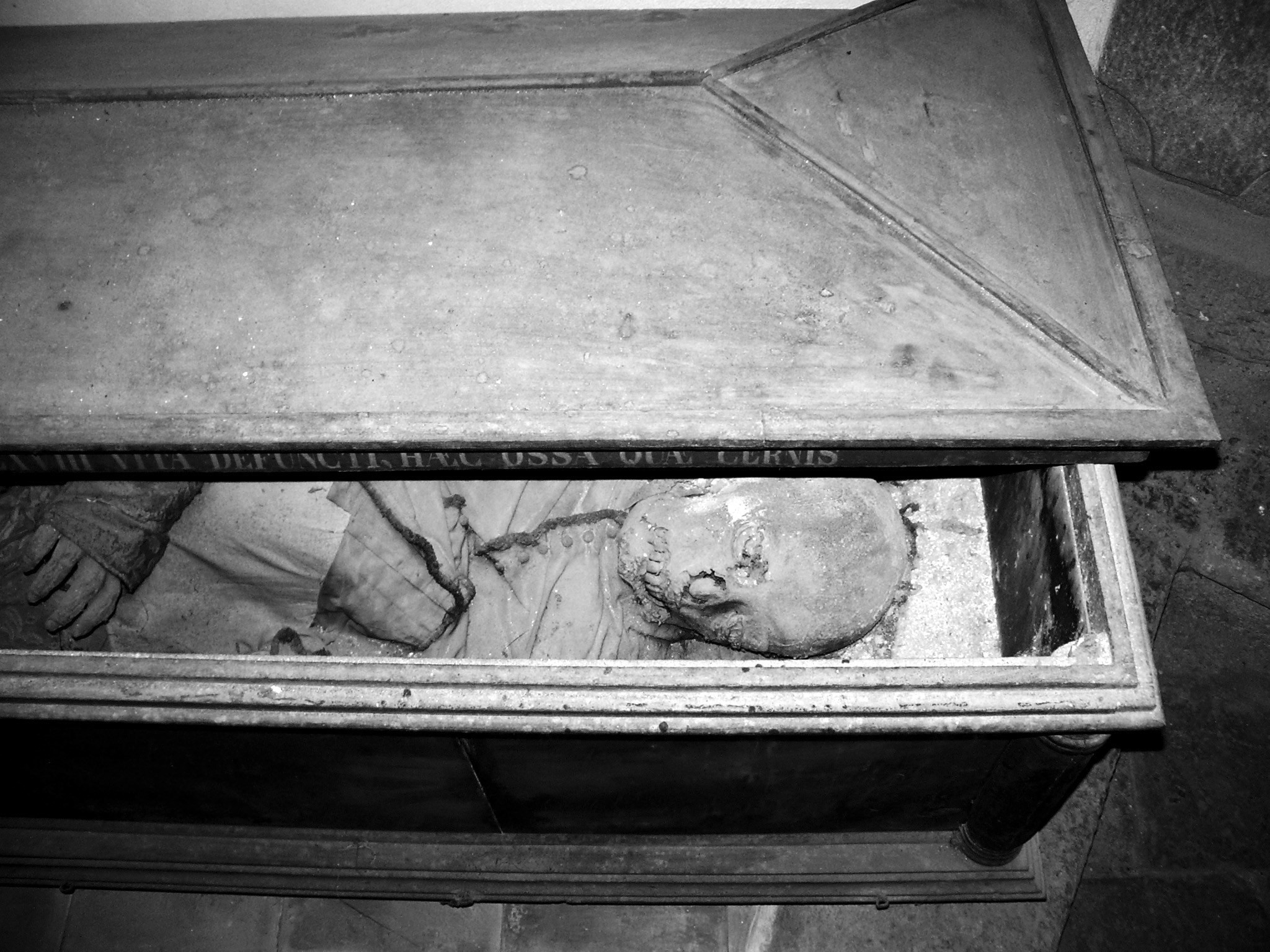
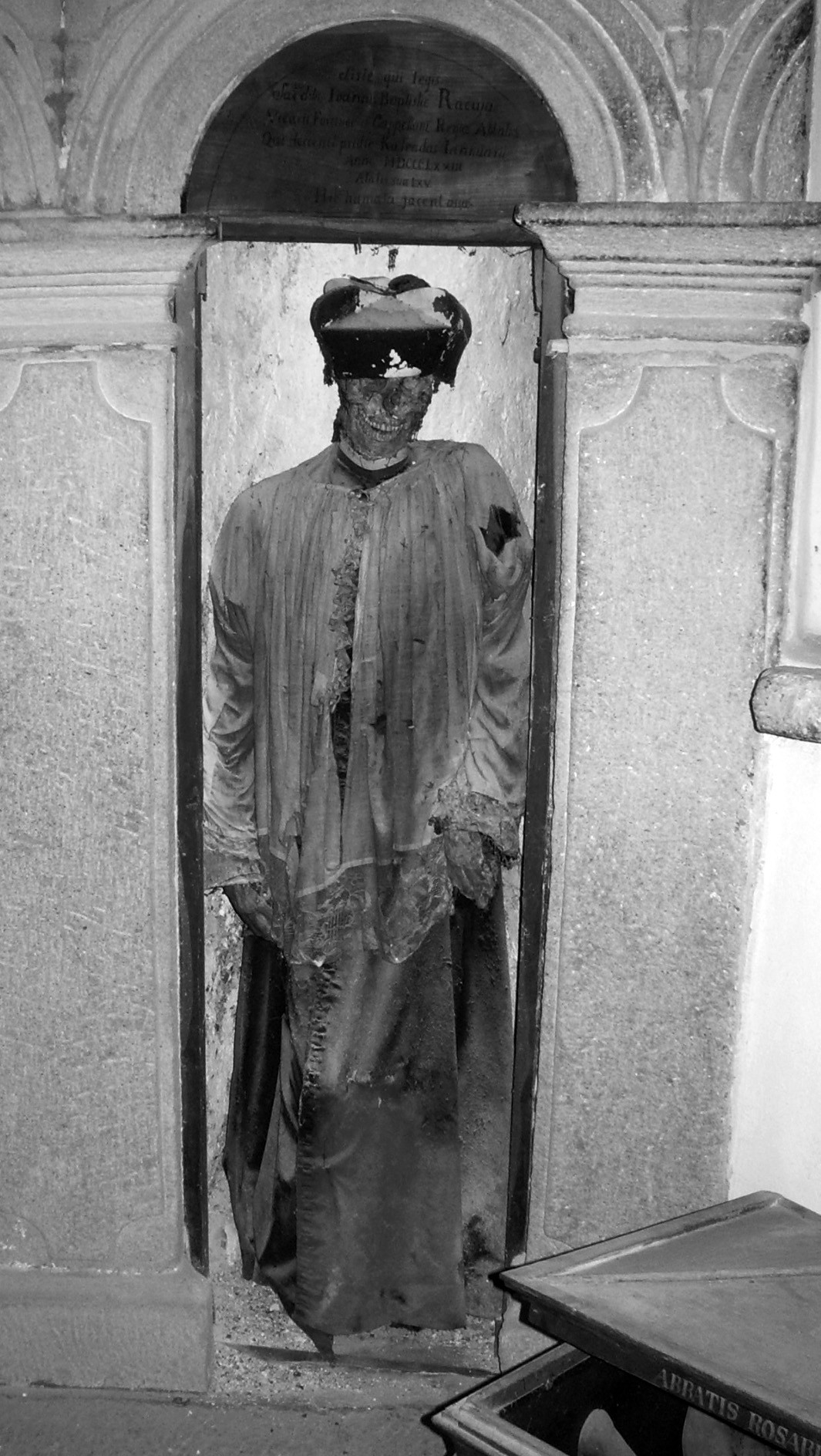
In the catacombs and crypts of Sicily, of course! My friend Dario Piombino Mascali is an Italian anthropologist and bioarchaeologist who is coordinating the Sicily Mummy Project. He is pictured here nose to nose with one of the mummies in the Capuchin Monastery in Palermo (click for excellent slideshow by photojournalist Fabrizio Villa), where little Rosalia Lombardo lies. Funded by National Geographic, Dario discovered the embalming formula used to preserve her body so perfectly. Other more typical Sicilian mummies Dario has examined include R. Stancanelli (1868) and J.B. Racuja (1873) in Novara di Sicilia and several 18th c. mummies in a crypt in San Marco d'Alunzio. Mummification and exposure was a privileged form of burial in southern Italy and was achieved by placing the corpse in a colatoio, which translates as a colander, but refers to a room or fixture in which the remains were drained of fluids. Placement on a horizontal colatoio such as a wooden dessication rack (2nd image) favored mummification, while being propped up in a sitting colatoio like a dehydration niche (3rd image) favored skeletonization, so that skull and bones could be stored in ossuaries. Visitors report that the draining room (where the liquids of the bodies were naturally wicked away by the well-ventilated conditions) and the drying room (where they were cleaned and dressed) are both on the guided tour of the Capuchin crypt. National Geographic Magazine writes:
"No one knows exactly what started the mummification; probably by chance it was discovered that a body left in a crypt with a particular atmosphere of coolness and porous limestone would actually dry out rather than rot. Then a system was devised. The newly dead were laid in chambers, called strainers, on terra-cotta slats over drains, where their body fluids could seep away and the corpses slowly desiccate, like prosciutto. After eight months to a year, they'd be washed with vinegar, put back in their best clothes, and either placed in coffins or hung on the walls."
As I was writing this post, I was imagining the odor of the galleries. According to National Geographic, they are cool and dank and smell of sour, spiced dust and rotting...cloth.

Thursday, July 22, 2010

Embalming Elvis


You may have heard the news this week - as reported by the Chicago Sun-Times, Reuters, BBC, Time, and many other media outlets - that the tools used to autopsy Elvis Presley (1935-1977) are being auctioned off. Quigley here to clarify the terminology for her readers: these are not autopsy tools, but embalming tools - as the Associated Press and the Chicago Tribune correctly trumpet in their headlines. The lots to be offered by Chicago's Leslie Hindman Auctioneers (2nd image) include a needle injector, an arterial tube, and aneurysm hooks that would have been used to carry out the arterial embalming of the body at the Memphis Funeral Home before Elvis was casketed (1st image) for a private and public viewing. The items include a toe tag, but not the scalpel, scissors, and saw that would have been necessary to open the body for examination at the autopsy, which was conducted at his father's insistence at the hospital before Elvis' remains were released to the funeral home. The items, retained after their use in 1977 by the senior embalmer at the funeral home, consist of the embalming instruments and a collection of postmortem articles, and are expected to fetch a combined total of $10,000 to $14,000.

Wednesday, April 7, 2010

Follow-ups

3/29/10 Bibles stopping bullets When I was researching this post, I found a remarkable story of a Ukrainian treasure hunter's find of a French bullet and a Russian bullet colliding in flight during a 19th c. battle.

3/26/10 Tarim mummies travel An article in the New York Times about these mummies excavated in the desert of China.

3/20/10 Capture myopathy Bats that were sheltered over the winter have been released back into the wild in Omaha.

3/2/10 Evelyn McHale A young man is the latest of about 30 people to kill themselves by jumping from the Empire State Building.

2/9/10 Green burial
Here and here are 2 more companies selling wicker caskets.

1/28/10 Fractals A fascinating video called "Nature by Numbers."

1/27/10 Machu Picchu This tourist destination has now reopened to the public.

1/3/10 Supper clubs and speakeasies A family in Shropshire, U.K., has discovered a hidden chapel under their home.

12/23/09 Child heroes
Two California kids, ages 9 and 11, delivered their baby brother when their Mom went into labor in March.

12/19/09 Nero's dining room A ceiling in Nero's Golden Palace has collapsed during excavation. A snack bar used in Pompeii reopens after 1,921 years.

12/15/09 Octopus achievement
Octopuses prefer high-definition over regular TV. A 9-legged octopus is found in Florida - by a chef.

12/4/09 CSI effect Another article about the effect of television police dramas on jurors.

11/23/09 Aquaria A 2-million-gallon tank containing sharks and thousands of other creatures sprang a leak in a Dubai shopping mall.

11/16/09 Follow-ups I used a photo of a man with half a body to illustrate this post; here is another.

11/13/09 Circus animals on the lam A herd of wild horses escaped from a ranch in California and galloped through the suburbs of Chula Vista (be sure to watch video).

11/12/09 Placentas and more An article about ingesting the placenta.

10/30/09 Tree mummies A slideshow of the world's oldest trees.

8/19/09 The narwhal
Photos of narwhals jousting.

8/7/09 Eunuchs A Briton living in Australia has been officially recognized as the world's 1st person "of no specific gender."

7/21/09 Steampunk
design Steampunk and taxidermy meet in the art of Lisa Black.

6/26/09 Multi-purpose cemeteries Massachusetts officials are frowning on the tapping of cemetery maple trees to make maple syrup.

6/18/09 Birthing and hoarding bunnies An Australian woman was living in her car with 11 dogs and 23 long-haired cats.

6/4/09 Elusive animals A species of lizard 6' long had been eluding scientists in the Philippines. Scientists were surprised to find shrimp and jellyfish active beneath a massive Antarctic ice sheet. The fossilized remains of a new species of raptor have been discovered in the Gobi Desert by 2 Ph.D. students. Another fossil found in Mongolia has evidence of a raptor eating another dinosaur. The impressions of a shark's teeth have been found in the fossilized poop of a crocodile, which was apparently still inside the animal when it was bitten.

5/9/09 Scrabble creator
A new edition of the game will allow the use of proper nouns.

5/1/09 Rossetti's menagerie In wombat news, a friendly orphan (pictured) has been rescued and a not-so-friendly wild one mauled a man near Melbourne.

3/26/09 Centenarians - and then some Neva Morris, the oldest woman in the U.S. and 2nd oldest woman in the world, has died at 114 in Ames, Iowa.

3/14/09 Seahorses and sea dragons A video of a seahorse giving birth.

3/10/09 Shakespearean insults A 300-year-old play previously dismissed as a forgery has been credited to William Shakespeare.

2/26/09 Underwater creatures A video of the humpback parrotfish, that eats rock and poops sand!

2/24/09 Preserved in amber
A rare Ethiopian amber deposit adds new fungus, insects, spiders, nematodes, and even bacteria to the Cretaceous ecosystem.

2/4/09 Embalmers and anthropologists A lovely little illustrated monograph about the embalming of Rosalia Lombardo has been published (in Italian) by my friend Dario Piombino-Mascali, who would like to publish an English edition.

1/28/09 Morbid motorcycles
The body of a man who loved driving earth-moving equipment has been driven to the grave in a tractor.

11/10/08 Oldest zoo in the world A Rhode Island zookeeper was treated for injuries after she was head-butted by a giraffe. This article notes that veterinarians are 4 times more likely than average to commit suicide. A zebra in a Zurich zoo cleans the teeth of the hippopotamus. A Chinese zoo has been criticized for allowing a 3-year-old to walk a tightrope above the tiger enclosure.

11/7/08 Lying in state A gunman attempted to vandalize the embalmed corpse of Vladimir Lenin in his mausoleum in Moscow's Red Square.

Monday, January 4, 2010

Follow-ups

Parade floats 1/2/10 A comment about this post mentioned the "Dirty Jobs" episode in which Mike Rowe helps dismantle parade floats. You can see a clip here at the 2-minute mark.

Marijuana and embalming fluid 12/28/09 Gamblers in South Africa are driving vultures to extinction because they believe that inhaling the smoke of the bird's brain confers the gift of premonition.

Bushmeat 12/27/09 National Geographic reports that many "zoos" in China are illegal fronts for the raising of tigers for their meat.

A Christmas Carol 12/24/09 A Turkish archaeologist is seeking the return of the relics of St. Nicholas (270-346) from Italy.

Happy Thanksgiving! 11/26/09 I decided against doing a post on artist Méret Oppenheim (1913-1985), but see 2 more of her great Surrealist works here (scroll down to the 2nd image) and here.

Stone/house 11/19/09 I just learned about the work of Mexican architect Javier Senosian, whose houses have a very organic style.

Taxidermy furniture 11/!6/09 A patron of a New York City restaurant has sued the owner for negligence after a 150lb moose head with antlers 3' wide fell off the wall and gave her a concussion. Meanwhile, in Florida, someone has combined an alligator and a motorcycle. Here is an article about taxidermy as a decor trend, and another artist using dead animals in her work. Lastly, check out the shoes here and here from the Virtual Shoe Museum!

World's heaviest insects 8/28/09 Owners of tarantulas are warned to protect their eyes after a man in Leeds, England, suffered spider hairs in his cornea when cleaning the cage.

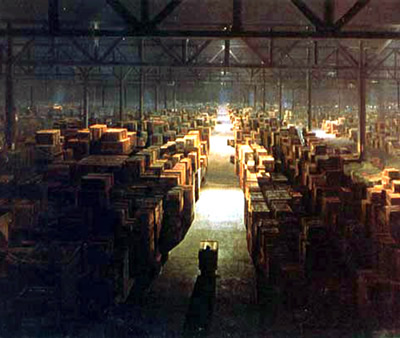
Museum behind the scenes 7/25/09 The failure of the U.S. Department of the Interior to properly curate the objects under their stewardship conjures up images of the final scene in Raiders of the Lost Ark.

Birthing and hoarding bunnies 6/18/09 More than 500 animals - most of them dead, including deer, cobras, and monkeys - were found in and around a home in Feltonville, Pennsylvania; they were collected not by a hoarder, but by practitioners of animal sacrifice.

"Seven Pounds" 6/14/09 The winner of a contest to have the "Best Job in the World" was stung by the extremely venomous Irukandjii jellyfish on the beach of his temporary home on Australia's Hamilton Island.

Giraffe evolution 5/15/09 A baby giraffe (pictured above) has been born - weighing 150lbs, standing 6' tall, and standing within an hour of birth - at the Niabi Zoo in Coal Valley, Illinois.

Mastectomy tattoos 4/27/09 After years of associating Susan G. Komen (1943-1980) with breast cancer, I wondered who she was.

Double-muscled dog 1/30/09 The tongue of a dog in Paisley, Scotland, swelled to 4 times normal after some pork membrane cut off the blood supply at its base.

Labels