Showing posts with label geography. Show all posts

Wednesday, July 6, 2011

Rare earths


Like warnings about the world's dwindling supply of helium, essential for operating MRI machines, news about the limited sources of rare earth elements seems to be flying under the radar of the public. These 17 metals are essential in the production of numerous hi-tech devices: aerospace components, battery electrodes, camera lenses, catalytic converters, computer memories, cordless power drills, energy-saving light bulbs, flat-screen televisions, fluorescent lamps, hybrid vehicles, laptops, lasers, magnets, military weapons, MRI contrast agents, night-vision goggles, portable x-ray machines, smart phones, welding goggles, and wind turbines. Listed below are the rare earths by symbol and name, with current pricing*:

The elements are not really rare, but deposits large and concentrated enough to be worth mining are. Currently, China supplies 97% of the world's rare earth needs and is expected to steadily reduce rare earth exports in order to protect its supplies. Fears of future shortages have caused prices to skyrocket, with demand expected to exceed supply by the end of the year and showing no signs of abating. In 2015 the world's industries are forecast to consume an estimated 185,000 tons of rare earths, 50% more than the total for 2010.

The world is now scrambling to find other sources of supply, including recycling and deep sea mud. The bad news is that rare earth mines often also contain radioactive elements, such as uranium and thorium, which contaminate mine waste. The good news is that the Molycorp Minerals Facility in Mountain Pass, California, which closed in 2002, has reopened. The mine is the largest known deposit of rare earth elements outside China and has big expansion plans. President and CEO Mark A. Smith explains, "The current U.S. demand is somewhere between 15,000 and 18,000 tons per year. In principle, Mountain Pass could eventually make the United States independent in rare earths."

*Prices are from June 2011 for oxides, as depicted in 2nd image.

Wednesday, June 8, 2011

Mind your teeth

I found this photograph, which appears in the May 2011 issue of National Geographic, a bit difficult to research. The caption makes clear that this mouthwatering display is not edible: these are rocks! The spread was on display at the 6th International Rare Stone Festival of Liuzhou, Guangxi Province, China. These "Gobi stones" were among the more than 3,000 specimens shown at the festival, which is held every 2 years. Here is the charmingly translated description of a similar display at the 4th annual festival:

"Gobi stones are on affectation in the anatomy of a grand barbecue at the 4th Liuzhou Rare Stone Festival, Guangxi Zhuang Autonomous Region on November 2, 2006. More than 1,000 attenuate stones from all over the apple are exhibited."

In addition to "foods," stone musical instruments are also a feature of the festival. Liuzhou has now made a name for itself as a distribution center for rare stones. If you'd rather have a real snack, you'd be better off attending Liuzhou's tea festival. But if you're intrigued by these yummy-looking rocks, look for the work of Taiwanese artist Hsu Chun-I, whose "A Banquet in Stone" was shown at the National Museum of Singapore in 2007. The exhibit featured 50 of Hsu's 250 dishes, including Monkey Head Mushrooms, "Bear's Paw," pig's trotters and eggs in dark soya sauce (Hsu's favorite), "Buddha Jumps Over the Wall," shark fin soup, abalone, "Dragon and Phoenix Steamboat," fried rice, steamed mutton thigh, "bak kut teh" (pork rib soup), walnut ice cream, coffee cake roll, and sweetmeats. Hsu had been inspired 20 years earlier when he saw the popularity of 2 display pieces at the National Palace Museum in Taiwan - a piece of jade that resembled a cabbage and another stone that looked like roast pork.

Friday, November 27, 2009

Place name changes


I heard something on the news the other day about Mumbai, India, and became curious about when and why the name of the city changed from Bombay. I knew why the country of Burma's name was officially renamed Myanmar, although many international journalists refuse to acknowledge the change. But when did Peking become Beijing and why did Constantinople become Istanbul? Here are the answers...
.
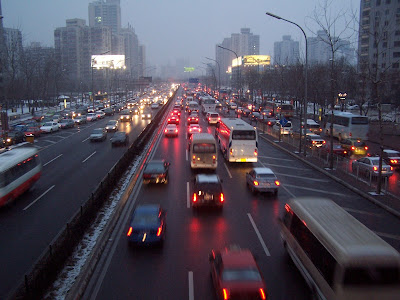
Peking (1st photo) to Beijing (2nd photo)
The name of the Chinese capital of Peking did not change - just the way it was Latinized. After the People's Republic of China was established in 1949, the government adopted a new transliteration method that changed the way the city was spelled in English. The pronunciation never changed in the East, and many Chinese were unaware of the perceived name change. Westerners continued to use both names until China began enforcing the use of the official name "Beijing" on all flights, sea routes, and official documents in the 1980s.
.
Constantinople (3rd photo) to Istanbul (4th photo)
The most well-known city in Turkey has had many names. After the Ottoman conquest in 1453, "Konstantiniye" was preferred to "Constantinople." The Greek word "Stambulin" ("the City") was often found on roadsides and punningly changed to "Islambol" ("where Islam abounds") by devout Turks. After the demise of the Ottoman Empire in 1923, "Stamboul" was most often used, although it was called "Constantinople" by Westerners well into the 20th c. Mustafa Kemal Atatürk (1881-1938), founder of the Republic of Turkey, adopted "Istanbul" as the city's official name, but Europeans showed great resistance, calling it "Konstantineopel" in Germany, "Constantinople" in Britain and France, "Konstantinopoli" in Italy, and "Konstantinopolis" in Greece. "Istanbul" was used in parentheses on Western maps into the 1960s, even though the current name also has early roots. The Byzantines were believed to have called it merely "the city" because of its size, so "eist enpolin" ("is tin polin") referred to going to the city, which may have been the origin of the current name, which was familiar to the Turks in the 11th c.
.
Bombay (5th photo) to Mumbai (6th photo)
When the right-wing Hindu nationalist party Shiv Sena won elections in the state of Maharashtra in 1995, they announced that the port city of Bombay was being renamed "Mumbai" after the Hindu goddess Mumbadevi. Federal agencies, local businesses, and newspapers were ordered to adopt the new name. Shiv Sena argued that "Bombay" was a corrupted English version of "Mumbai" and a remnant of British colonial rule, although the national government opposed the name change, fearing that the city would lose its international identity. The change seems to have been successful, although the Shiv Sena's intention to do away with the term "Bollywood" has not.
.
Burma (7th photo) to Myanmar (8th comparison photo)
The ruling military junta changed Burma's name to "Myanmar" in 1989. The change was recognized by the United Nations and countries including France and Japan. But the U.S. and the U.K. continue to use both names because they refuse to accept the legitimacy of the unelected military regime, which also changed the name of Rangoon, the country's former capital, to "Yangon." "Burma" and "Myanmar" refer to the same thing and one word derives from the other. "Burma" is the infomal word used in conversation, and "Myanmar" is the literary, ceremonial, and official form. Imposing the formal name is a form of censorship, so the use of it in the international community indicates where sympathies lie.

Labels