If you have been following Quigley's Cabinet for a while, you know that I love Galapagos tortoises and blog about them every chance I get: a tortoise in the desert, a tortoise wearing a crittercam, a tortoise eating a pumpkin, a tortoise getting a CT scan, a tortoise known for his sexual prowess, a tortoise who never mated, and tortoises very near extinction. So how could I resist posting a link to this delightful video of a giant Galapagos tortoise discovering the remote control camera set up by Alaskan-based videographer Arlo Midgett (HERE'S HIS YOUTUBE CHANNEL)!
Tuesday, April 30, 2013

 Posted with Blogsy
Monday, April 29, 2013
Tegu BOLO
If you live in Bay County in the Florida panhandle, you are asked by officials with the Florida Fish and Wildlife Conservation Commission to be on the lookout for 30lb exotic lizards. They have recaptured 33 specimens of Argentine black and white tegu (Tupinambis merianae), but a few are still missing in the Cedar Grove area of Hiland Park. Tegus (ABOVE IS AN EXAMPLE OF THE BLUE VARIETY) are omnivorous tropical reptiles that can grow more than 4' long and live for 20 years. They are said to make good pets, because they have a high level of intelligence and form attachments with their owners. Usually quite docile as adults, they do have sharp teeth and claws and strong jaws to defend themselves if they feel threatened. The agency has set up a hotline for people in the neighborhood to report sightings rather than try to capture the lizards themselves. “During the investigation, the current residents have been nothing but helpful,” says officer Jerry Shores. As a nonnative species, the tegus threaten the natural Florida wildlife until they are caught – which is why a criminal investigation has been launched against the licensed seller of the lizards who left town and abandoned them.


Sunday, April 28, 2013
Numismatic nickel


According to the inflation calculator, a nickel in 1913 has the value of $1.18 in today's economy. But not this nickel. Sold on Thursday by Heritage Auctions for $3,172,500, it's got quite a backstory. The coin is one of five struck at the Philadelphia mint in late 1912, but with the year 1913 cast on its face. It was not a mistake, but a deliberate act by a mint worker to sell them at a profit, which he did after the statute of limitations ran out. The nickels remained a set until 1942, when North Carolina collector George O. Walton, purchased one for a reported $3,750. Twenty years later, Walton was killed in a car crash and it was found among the hundreds of coins scattered at the crash site. Walton's sister, Melva Givens of Salem, Virginia, inherited the 1913 Liberty nickel, but stashed it in a closet after experts declared it a fake because flaws in the date stamping raised suspicions that the struck coin had been altered. Givens' son Brian Myers found it 30 years later, when his mother died in 1992, became curious about it but did not have it valued until 2003. That year, the American Numismatic Association was holding a "World's Fair of Money" in Baltimore, and there – where the other 4 1913 Liberty nickels were being displayed – a team of rare coin experts declared it genuine. Myers and his siblings loaned their nickel to the American Numismatic Association Money Museum in Colorado Springs for nationwide exhibit over the last 10 years before finally deciding to sell it. The winning bid came from a pair of investors, one in Kentucky and one in Florida. "This is a trophy item that sort of transcends the hobby. It's an interesting part of American history and there are collectors who look for something like this. Basically, a coin with a story and a rarity will trump everything else," explains curator of the Colorado Springs Museum Douglas Mudd.
Saturday, April 27, 2013
Squashed science
Data gathered in the Indian Ocean off the Horn of Africa is used to advance many scientific questions, among them the following:

- The mechanics of plate tectonics
- The evolution of plankton
- The study of oceanography
- The preparation of weather models
- The dynamics of monsoons
- The prediction of global warming
Friday, April 26, 2013
Beefy builders
Egyptologist Richard Redding of the University of Michigan has done some meat math to determine the extent to which bureaucracy played a role in building the pyramids at Giza. The pyramid-builders - who were not slaves – lived just 1,300' (400m) south of the Sphinx. Based on animal bones at slaughter sites nearby, he estimates that the workforce consumed more than 4,000 pounds of meat each day - about 11 cattle and 37 sheep or goats, supplemented by an equivalent amount of fish and other sources of protein. This means that the ancient Egyptians would have needed to maintain a herd of 21,900 cattle and 54,750 sheep and goats to keep up regular delivery to the Giza workers. To support the animals and the herders would have necessitated an area of 465 square miles (1,205 square km) – about 5% of the present-day Nile Delta. This investment of land, livestock, and "support staff" ensured the 6 lbs of meat they needed each week to contribute half of the 67g of protein they had to eat every day to perform hard labor. This daily total was calculated by Redding using modern statistics, but adjusting for the smaller body size of ancient Egyptians. "They were young males, who ate exceptionally good food and had good medical care and were working for the good of society," Redding says of the thousands of workers who spent 20 years constructing the Great Pyramids. "They probably got a much better diet than they got in their village."

Thursday, April 25, 2013
Growing gift

Here are a few things that have happened since the people of Keyes, Mali, presented the workers at Germany's Colbitz water treatment facility with a terrarium-sized crocodile some 40 years ago:
- Efforts to relocate the animal to the zoo or elsewhere, before and after the reunification of Germany in 1989, have been unsuccessful
- The Nile crocodile was dubbed "Theophil" until the discovery of a clutch of unfertilized eggs 6 years ago proved that she was female and her name was changed to "Theophilia"
- She has grown to a length of over 9' (3m) and a weight of 617lbs (280 kg)
- Her original caretaker, Gunter Hellman, retired but returns to see her several times a year (IMAGE ABOVE)
- She gets regular visitors and the sewage plant has sold 15,000 keyrings in her image
“We used to joke that she was our water tester," says Hellman, but Theophilia does not actually live in the treated (or untreated) water.
Wednesday, April 24, 2013
Circus occurrences

- At the Ringling Bros. and Barnum & Bailey Circus in Tupelo, Mississippi, an elephant was wounded in a drive-by shooting. Carol's trainer doesn't believe she was specifically targeted (she just happened to be the elephant closest to the street in the enclosure), but the act itself was deliberate and could easily have killed her rather than just wounding her shoulder. Several sources, including PETA, have offered a combined total of $37,750 as a reward for information leading to an arrest.
- At the Isis Shrine Circus in Salina, Kansas, a tiger escaped briefly as it was being moved from the ring back to its enclosure. It slipped into the restroom moments before local resident Jenna Krehbiel and her 3-year-old daughter entered and allowed the door to close behind them. They found themselves a mere 2' away from the beast, but were quickly ushered out before they could panic.
Tuesday, April 23, 2013
The island that isn't

When the whaler Velocity returned from a voyage in the Pacific in 1876, the ship's master reported the sighting of some "Sandy Islets," which were included 3 years later in an Australian maritime directory. Said to extend north and south "along the meridian 159º 57' E" and "between lat 19º 7' S and 19º 20' S," Sandy Island became established when it was charted near New Caledonia on a 1908 British Admiralty chart (IMAGE ABOVE), though later charts from the U.K. Hydrographic Office attached the internationally recognized abbreviation "ED" (existence doubtful). Although France removed it from its maps, Sandy Island persisted in global databases after geographic information was digitized. The phantom island – now believed to have been a floating raft of pumice or a cartographer's trick to trap copyright violators – has now been officially "undiscovered." In 2012, researchers aboard the Australian national research vessel RV Southern Surveyor spent 25 days mapping the sea floor and collecting rock samples to understand the tectonic evolution of that corner of the Pacific. Maria Seton of the University of Sydney and her colleagues noticed some discrepancies on their charts and decided to test the existence of the landmass reported to be the size of Manhattan. Steven Micklethwaite of the University of Western Australia recalls, "We all had a good giggle at Google as we sailed through the island."
Monday, April 22, 2013
Ants, analog to digital
The secrets to the efficiency of ant societies have been revealed by making casts of their very elaborate colonies. Scientists in Brazil, for instance, poured 10 tons of concrete down the tunnels and chambers of leaf cutter ants and then excavated the labyrinth, which extended 26' below the surface and covered an area of 500 sq. ft. (PHOTOS HERE). The exercise revealed main routes and side roads, allowance for adequate ventilation, and rubbish sites and fungus gardens. Danielle Mersch and her colleagues at the University of Lausanne in Switzerland took the next step, tagging every single worker in 6 colonies of carpenter ants, so that they could track them by computer. The unique barcode-like symbol on each of more than 600 individuals allowed them to record each ant's position twice per second (VIDEO HERE). Over 41 days, the researchers collected more than 2.4 billion readings and documented 9.4 million interactions between the workers, believed to be the largest-ever data set on ant interactions! Among other things, they found that the workers comprise 3 social groups that perform different roles and carry out their duties in different parts of the nest. In addition, the Swiss researchers discovered that the insects move from one task to the next as they age, the youngest nursing the queen and her young, the middle-aged cleaning the colony, and the elderly foraging for food. University of Arizona entomologist Anna Dornhaus comments, “The paper is a game-changer, in the size and detail of the data set that was collected. Different methods of automatically tracking animal behavior have recently been developed, and this is one of the first empirical studies that have come out as a result."

Sunday, April 21, 2013
Bloated croaker
I was unaware (until long time reader Chase turned me onto this blog) – and maybe you are, too – that 17th-century Dutch painters sometimes turned their talents to more morbid subjects than fruit and flowers. There are the still lifes that contain dead game animals (like this rabbit attributed to Jan Fyt) and memento mori paintings that include human skulls. But Ambrosius Bosschaert the Younger, who usually followed in the style of his father (SLIDESHOW HERE) chose c. 1630 to portray in great detail, using oils on copper, the decomposing body of a frog. What's more, the image has now been brought to life, so to speak, by contemporary artists Rob and Nick Carter. Starting with a high-resolution photograph of Bosschaert the Younger's "Dead Frog with Flies," they have created a silent 3-hour looped film and display it on a computer concealed behind an original Old Master frame. With their "digital still lifes," they hope to carry into the modern age the tradition perfected by the Dutch so many centuries ago. Nick explains, “They tried very hard to create something that feels so tangible that you could almost touch it. Hopefully we’ve continued with something that they worked hard to start."

Saturday, April 20, 2013
Marathon mayhem

Contrary to what the insurance ads would have you believe, "mayhem" is not defined as a fender bender or property damage. It is the willful infliction of bodily injury on a person, such as what was perpetrated on runners, spectators, and staff at the Boston Marathon on April 15th. The 2 bombs, set off by 2 brothers, killed 3 people – including an 8-year-old boy – and grievously wounded more than 170 others. One of those injured in the blast was 27-year-old Jeff Bauman (PICTURED ABOVE), who lost both lower legs, while waiting for his girlfriend to cross the finish line. After Jeff's traumatic amputation (PHOTOS HERE – CAUTION*), he was rushed to Boston Medical Center and when he woke up from sedation had the presence of mind to ask for a pen and write, "bag, saw the guy, looked right at me." While still in intensive care, Bauman gave the F.B.I. a description of the man he saw, according to his brother Chris, which helped investigators focus on the suspects when screening hours of video of the attack. Suspect #1 was killed by law enforcement officers after the murder of a campus cop, a car chase, and a shootout (UNVERIFIED PHOTO HERE – CAUTION). Suspect #2 was captured bloody but alive last night.
*I do not espouse the political rantings beneath the photos.
Friday, April 19, 2013
Yesterday's ingredients
In 1865, Dr. Alonson B. Howard transformed a tiny clapboard schoolhouse on his property in Tekonsha, Michigan, to use for his medical practice. He partitioned it into 3 rooms: a waiting room, a laboratory, and an office with a dispensary (PICTURED). In addition to seeing patients there, he made house calls and made rounds miles in every direction by train, getting paid sometimes in cash and sometimes in kind. The cost of any medicine was included in his fee, and he was well-versed in herbal remedies, inspired in his youth by the local Indians. When Dr. Howard died in 1883, his wife padlocked the building and it remained untouched until 1956, when their great-grandson donated it to the Henry Ford Museum. It was relocated to their Greenfield Village, and its shelves likely contain some of the Museum's hundreds of patent medicines. The contents of 50 of these – including Dr. Tutt’s Liver Pills, Dr. F.G. Johnson's French Female Pills, and Dr. Comfort's Candy-covered Cathartic Compills – were analyzed by Mark Benvenuto of the University of Detroit Mercy and his students. The boxes listed the components and old newspapers included the costs and the ailments they were supposed to cure, but it took the nondestructive technique of energy dispersive X-ray fluorescence spectroscopy to detect the signatures of specific elements. As the team reported at the recent meeting of the American Chemical Society, these included beneficial ingredients like calcium, iron, and zinc, but also potentially toxic heavy metals like arsenic, mercury, and lead, in addition to cocaine, heroin, and high concentrations of alcohol. The remedies were promoted as much as a century before the creation of the Food and Drug Administration, and "patent" only meant that the seller had given a name to it. Benvenuto explains, "I don't know if people were in it just to sell stuff or actually thought they had something that would solve a problem. But if you stop and think about this, what we were analyzing here is kind of a first step into where we've come to today. If you go back to the year 1800, the way people got rid of ailments was a lot of home remedies. You and I might say they didn't really do a controlled study on this sort of thing, but no one had really conceived of controlled studies back then. That doesn't mean they cured nothing.

Thursday, April 18, 2013
Forcepfly

It's not hard to see why this insect (Austromerope braziliensis) is commonly referred to as a forcepfly. But it is not easy to understand why this is only the third extant species of a family that has been around for 200 million years. It is theorized that the bugs divided into a northern and southern branch when the supercontinent Pangea broke up! This species was discovered in southeastern Brazil not too long ago, and described earlier this year. "The discovery of this new relict species is an important signal to reinforce the conservation of Brazilian Atlantic Forest biome. Certainly there are many more mecopterans species yet to be discovered in these forests," says lead author Dr. Renato Machado from Texas A & M University. Not much is known about forcepflies yet, except that they're capable of stridulation, which is the noise made by rubbing body parts together like a cricket. But that's not what they do with the forceps. Those are a special feature of the males, used to hold their mates in place.
Wednesday, April 17, 2013
Gilding the lily

Turkish artist Hasan Kale* paints miniatures, but not on the head of a pin. He has painted scenes of his native Istanbul on a pumpkin seed, a coffee bean, a grain of rice, a pasta shell, a lump of sugar, a lemon peel, and a plant spike. But his canvasses also include things that would seem to need no further beautification. Kale brushes landscapes onto the natural colors of butterfly wings, adds images to the natural curl of the snail shell, and paints in the natural partitions of insect wings (IMAGES HERE, HERE, AND HERE). It is less intriguing to me that he attempts to further beautify beetles and butterflies, than the fact that he can fit his entire portfolio in his pocket!
* Thanks to Shelley for the lead on this one.
Tuesday, April 16, 2013
Mass grave simulation

The anthropological research facility at the University of Tennessee, more commonly known as the "Body Farm," is embarking on a new and ambitious project. For more than 30 years, researchers have been exposing individual donated human corpses to the elements to discern decomposition rates under various conditions and make it easier to solve crimes. Now they are burying multiple bodies in a single grave to make it easier to solve crimes against humanity. Led by anthropology professor Amy Mundorff, students dug 4 graves: the first contains the remains of 6 people, the second contains 3, the third contains a single body, and the fourth was refilled with dirt as a control for the experiment. For the next 3 years, UT scientists will monitor the burial sites from the sky, from the ground, through sampling, and in different light spectrums to determine whether and how they can be detected from afar. “Mass graves are the most profound example of evil, and you may not be able to get away with it much longer if we can make this work,” says Mundorff's colleague Michael Medler at Western Washington University, who helped conceive the project. The remote sensing technologies they refine – such as identifying subtle changes in satellite images – will allow investigators to locate clandestine graves around the world and to prosecute the killers. After the project wraps up, the University of Tennessee anthropologists will offer a seminar for international workers on excavating mass graves, which has previously only been demonstrated on animal remains. But the advances in the forensic science will hopefully go beyond discovering and examining the remains after the crime has been committed, and begin to undermine the confidence of the mass killers. “The most exciting part of the project is conceptually making it harder for people to feel like they can get away with these things, even decades later,” says Medler. “Because we will see it.”
Monday, April 15, 2013
Dog mummies

Some of my readers seem to be put off by pictures of dead dogs, whether put aside for consumption or preserved in Pompeii, so to you I apologize. But the rest of you please follow as I lead you into the Dog Catacombs. Dogs, cats, and other creatures have been mummified accidentally or deliberately in other cultures, but the ancient Egyptians are best known for their shrines to deities filled with preserved animal offerings. In a labyrinth of chambers and passages underneath the ancient royal burial ground of Saqqara, between the 6th and 1st centuries B.C.E., they deposited millions of mummified puppies as offerings to Anubis, their jackal-headed god of the dead (VIDEO HERE). The Dog Catacombs were first documented in 1897 by French Egyptologist Jacques De Morgan, but were never fully studied. The task, funded by National Geographic, was taken on in 2009 by an excavation team led by Salima Ikram of The American University in Cairo and a research team led by Paul Nicholson of Cardiff University. Iran is an expert on mummification with a specialization in archaeozoology, the study of animal mummies. She hopes to be able to identify the breeds of the estimated 8 million canids piled over 3' (1m) high in the tunnels, but also wants to put the practice within the context of ancient Egyptian spirituality: “We are trying to understand how this fits religiously with the cult of Anubis, to whom the catacomb is dedicated....[I]n some churches people light a candle, and their prayer is taken directly up to God in that smoke. In the same way, a mummified dog's spirit would carry a person's prayer to the afterlife."
Sunday, April 14, 2013
Water on the brain

On the cover of Rosamond Purcell's incredible book Special Cases: Natural Anomalies and Historical Monsters, is her photograph of the skeleton of a child with hydrocephalus whose skull has "opened like a flower." Without treatment, the condition – in which cerebrospinal fluid fills the cavities of the brain causing intracranial pressure – is fatal. The remedy is to drain the fluid with a shunt but that may not be affordable in developing countries. Such is the predicament of Abdul Rehman of Tripura, India, whose daughter Runa's hydrocephalus has gone untreated because he makes the equivalent of a mere $2.75 a day. "Day by day, I saw her head growing too big after she was born. It's very difficult to watch her in pain. I pray several times a day for a miracle -- for something to make my child better," he says. The head of the 16-month-old child now has a circumference of 36" (91cm) and she likely won't live very much longer (PHOTOS HERE – CAUTION). She certainly has brain damage, and likely suffers from seizures and blindness, among other symptoms. Her photos are now making the rounds in the weird news, but even if the publicity results in donations, it is too late for treatment. Draining off the fluid at this point will probably cause her brain to bleed or collapse.
Saturday, April 13, 2013
Franklin fate refigured
I trust that my readers – like me – find the image above more fascinating than disgusting, knowing that you are staring into the intact face of a man who died in 1846 (MORE IMAGES HERE). This is 21-year-old Royal Navy petty officer John Shaw Torrington, who joined the ill-fated Franklin expedition which failed in its mission to find the Northwest Passage. In 1980, University of Alberta anthropologist Owen Beattie exhumed Torrington's body from his grave under almost 5' (1.5m) of permafrost on Beechey Island in Canada. He conducted an autopsy which showed that the young man had suffered from tuberculosis and had likely been killed by pneumonia. Lead poisoning, due to eating the food from poorly soldered tins, was also cited as a contributing factor and proposed as a chief cause of the expedition's failure. But now, researchers using new technology* to analyze bone fragments have struck down that theory. Western University chemist Ron Martin and colleagues have proven that the faulty solder seals in the meat cans were not the principal source of lead found in the remains of the Franklin crew members. The exposure would had to have begun long before, and was likely a problem for many 19th c. people. Martin explains, "We'll probably never know what happened to the crew of the Franklin so it will remain one of the great mysteries of Canadian history but our resources fail to support the hypothesis that the lead in the bones came from the tins and I certainly believe that it didn't. The time, from departure to death, just wasn't long enough for lead from the tins to become so dominant throughout all the bones." The Arctic retains one of its biggest secrets, in addition to the well-preserved remains of Torrington and the 2 others lucky enough to have been given a proper burial.
*Synchrotron X-ray fluorescence and laser ablation/mass spectroscopy

*Synchrotron X-ray fluorescence and laser ablation/mass spectroscopy
Friday, April 12, 2013
Dinosaur dog-paddle

Thursday, April 11, 2013
Phocomelia phantom

Perhaps the most famous example of a person born with phocomelia is Mignon the Penguin Girl, who toured in circus sideshows in the early 20th c. Phocomelia is a condition – caused by thalidomide (before it was taken off the market) or by genetic inheritance – characterized by malformation of the limbs. One result is oligodactyly, the opposite of polydactyly, in which digits of the hands or feet are missing. There is no "poster girl" for another condition: phantom limb phenomenon. This is the condition experienced by a majority of amputees, who feel sensations of movement and especially pain in their missing limb. For instance, someone who has lost an arm might feel as if his or her hand were balled up and the nails were digging into the palm. All of this leads up to a strange case from a couple of years ago brought to my attention on Reddit. A woman born with phocomelia had only three fingers on her hand. That hand later had to be amputated after she was in an accident. After the amputation of the hand, she sprouted a phantom hand complete with 5 fingers, including a phantom thumb and index finger that had been absent since her birth. Authors P.D. McGeoch and V.S. Ramachandran of the Center for Brain and Cognition at the University of California, San Diego, write, "This suggests that a hardwired representation of a complete hand had always been present in her brain....The case powerfully demonstrates the interaction of nature and nurture in creating and sustaining body image."
Wednesday, April 10, 2013
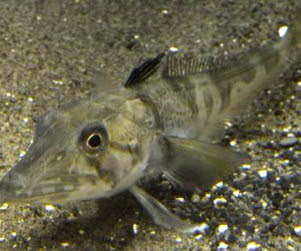
Unclear
In 2009, biologists found a fish with a clear head (the Pacific barreleye fish, Macropinna microstoma). Now they are trying to solve the mystery of why the Antarctic ocellated icefish (Chionodraco rastrospinosus) has crystal-clear blood. Every other animal with bones has the protein hemoglobin to carry oxygen throughout the vascular system, which is what makes the blood red. Scientists speculate that the fish's unusually large heart is able to push the oxygen through its system using plasma. And the other unusual characteristic of the icefish – the fact that it has no scales – may allow it to absorb oxygen more easily from the water at depths of 3,200 feet (1km). The Tokyo Sea Life Park is the only facility that has the species in captivity, after receiving them from Japanese fishermen 2011. But they soon hope to have more to study: "Luckily, we have a male and a female, and they spawned in January," says the aquarium's Satoshi Tada.
.
.
Tuesday, April 9, 2013
Peruvians with purpose
On the evening of April 2nd, there was a minor crisis in Contamana, a small town in northeastern Peru. A 31-year-old woman had delivered her baby at the local medical center. Complications arose and mother and newborn needed to be transported to a better-equipped hospital. Doctors arranged to have her, the baby, and a 17-year-old male patient suffering from possible leptospirosis evacuated 79 mi (128km) away to a facility in Pucallpa by light aircraft. Although they had authorization to take off, operations at the Contamana airport had ceased for the day and the runway was unlit. A local radio station broadcast an appeal asking the drivers of motorcycle and motorcycle taxis (EXAMPLE IN THE IMAGE ABOVE) to go to the aerodrome to light up the 800m landing strip. Minutes later, 300 drivers complied and lit up the runway to the applause of bystanders. Later reports indicated that the young man died of his illness, but the cooperation among civilians in an age when too much news is bad did not go unnoticed around the world. "We have always been people with a heart," said Adolfo Lobo, the radio presenter who put out the call for help.

Monday, April 8, 2013
Revealing weapons

The fearsome weapon above was used in the mid-19th c. by natives of the Gilbert Islands (now part of Kiribati) in the South Pacific. In addition to using sharks for household items and food, the islanders would edge swords, spears, and daggers with their razor-like teeth, attaching them with coconut fiber, human hair, and stingray skin. The historic weapons had been languishing in the collections of Chicago's Field Museum of Natural History until Columbia University biologist Joshua Drew and his colleagues decided to identify which shark species had been used. They cataloged 17 species and determined that 2 of them—the spotfin shark and the dusky shark—are no longer found in the local reefs. Remarked Drew, "Had we never done this work, nobody would have ever known that these things ever existed there. It had been erased from our collective memories that these sharks once plied these waters."
Sunday, April 7, 2013
Rhinoceros once removed

Saturday, April 6, 2013
Tusk hacked
On March 29th in the early hours of the morning, the Paris police caught a 20-year-old man limping down the street carrying a 7 lb (3 kg) elephant tusk over his shoulder. They had been alerted by neighbors who heard noises inside the Museum of Natural History. The Museum's alarm had also sounded when the man broke a thick window to gain entry. He had come equipped with a chainsaw to do some indoor poaching. His source of ivory: the skeleton of an African elephant that had been given to King Louis XIV by the King of Portugal in 1668 and lived out its days at the Palace of Versailles. Although the tusks were not original to the animal and had been added in the 19th c., they are still of significant scientific and historical value. Luckily, since they have been recovered they can be put back in place. “The skull is in excellent condition, which means repairing it will be quite easy,” says Jacques Cuisin, from the Museum’s restoration workshops. As a bit of poetic justice, the thief broke his ankle when he jumped from a railing exiting the museum – inside which he left his chainsaw whirring.

Subscribe to:
Comments (Atom)


